More Blog Posts
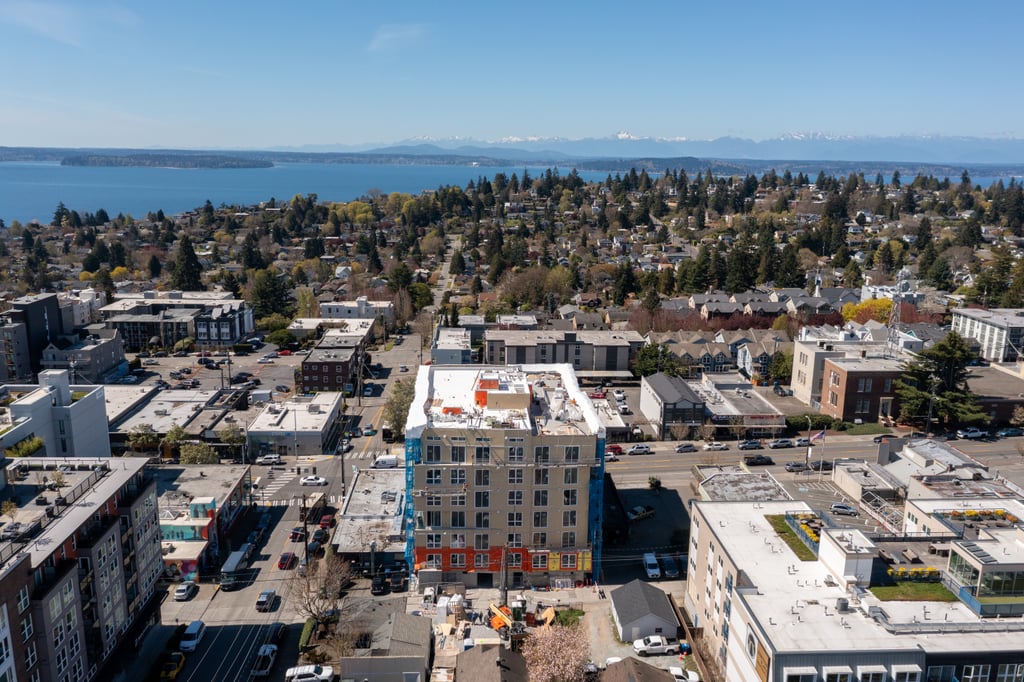
The lot at 50th and Dakota has sat behind a chain-link fence for more than a decade, visible to the roughly seven hundred students who attend the school and explained to almost none of them. In February 2026, as West Seattle Blog reported, the answer to what happens to it finally changed. Whether that counts as progress depends on what you thought "progress" meant.
The parcel is a decommissioned Seattle City Light substation, one of six the utility declared surplus in West Seattle years ago, as West Seattle Blog reported in 2019. Underneath the chain link sits a fenced corner of cracked concrete pad, leftover plumbing fittings, and close to twenty mature trees, three kinds of pine, a Lebanon cedar, a madrona, Japanese maples, cherry and birch, six of which meet the city's threshold for exceptional tree status. The centerpiece is a cherry tree neighbors call the Granddaddy, the one kids have been climbing through the fence gaps for years and the one a 2016 arborist survey was built around.
A volunteer group called the Urban Homestead Foundation formed that same year with a specific, unglamorous goal: buy the site from the city before it went to a private developer, and turn it into a garden, gathering space, and outdoor classroom for the elementary school across the street.
This is the part that makes the story worth telling, because the group did almost everything right and still couldn't close the deal for ten years.
By 2017, the foundation had its 501(c)(3) status and had landed something rare: a $281,000 matching grant from King County Conservation Futures, an award that almost always goes to government projects rather than a small community nonprofit. The site was appraised that year at $650,000, and the grant was designed to help cover the purchase.
Then the parcel was reappraised, and the number moved. The grant fell further short of the purchase price, so in 2018 the group had to go back and request a $91,000 reallocation just to keep the match intact. Seattle Parks also pledged $65,000 toward the total at some point along the way, and organizers were still running garage sales and dine-out nights to close a gap that kept resizing itself every time the county looked at the land again.
Here's the shape of the decade, condensed:
Of the six former substations Seattle City Light declared surplus at the same time as Dakota, only one, Delridge Wetland Park, has actually finished the trip to public green space. Dakota still hasn't. That is the real baseline here. Community will, matching grants, and a decade of fundraisers were not enough to guarantee an outcome that, elsewhere in West Seattle, happened on the first try.
A teacher at the school, quoted in a KING 5 report years ago when the campaign was still young, put the stakes plainly: "I think it's very important for the kids to have that right outside our door." One of the founders, quoted in Westside Seattle, was blunter about what losing the window would mean: "once it's gone, you'll never get it back."
In February 2026, the Urban Homestead Foundation told supporters it was stepping back. Forterra, an established King County land conservation nonprofit, is taking the Dakota Homestead project forward. The foundation will transfer its remaining donations to Forterra and dissolve.
What did not happen in that announcement is a purchase. Forterra still has to close the same funding gap that outlasted a decade of volunteer fundraising, and as of the February update, that gap had not been specified publicly. The land is still fenced. The Granddaddy cherry tree is still not officially saved. What changed is who is now responsible for finishing what a group of parents and neighbors started nearly ten years ago.
It is worth walking a few blocks to Ercolini Park to see how the other version of this plays out. The park sits at 4542 48th Ave SW, named for Joe and Julia Ercolini, who farmed and sold produce on that land from the 1930s through the decades that followed. The city bought the site in 2005 using a Washington Wildlife and Recreation Program grant, matched the funding, and opened it as a neighborhood playground without the decade of nonprofit fundraising the Dakota site would later require.
The difference wasn't community enthusiasm. Genesee has plenty of that for both parcels. The difference was who was doing the buying. When the city is the acquirer and the funding is a straightforward government-to-government match, land in this neighborhood becomes a park in a normal planning cycle. When a private nonprofit has to assemble the money parcel by parcel while land values move underneath them, the same outcome can take ten years and still not be guaranteed.
If you live near Genesee Hill Elementary, the practical thing to track isn't the fence itself, it's whether Forterra publishes a specific funding target the way the Urban Homestead Foundation used to. That number, once it appears, will tell you more about the site's near-term future than anything else circulating in the neighborhood right now. Forterra has said it will continue accepting donations earmarked for the project in the meantime.
None of this happens in a vacuum. The same stretch that runs past the Dakota site and down toward Alaska Junction is where Genesee’s day-to-day life starts to take shape: Buddha Ruksa for Thai food on Genesee Street and Olympia Coffee Roasting a few doors from West Seattle Work Shop if your Saturday errand list includes both caffeine and a secondhand find. It’s a small, walkable pocket, which is exactly why a single vacant lot in the middle of it has held the neighborhood’s attention for ten years running.
That kind of attention span, the fact that people here still know the name Dakota Homestead a decade in, says something about how closely Genesee residents track what happens to the land around them. Whether the outcome is a school garden or something else entirely, it will not happen quietly.
If you're thinking about what a neighborhood like this means for a home search, whether it's the kind of land use questions that come up around a specific property or just understanding how a block has changed over time, Mara Haveson has been working these Genesee streets long enough to know which stories are still unfolding. Schedule a consultation when you're ready to talk specifics.

Address
4531 California Ave., SW
Seattle, WA 98116
Mara Haveson